Who am I?
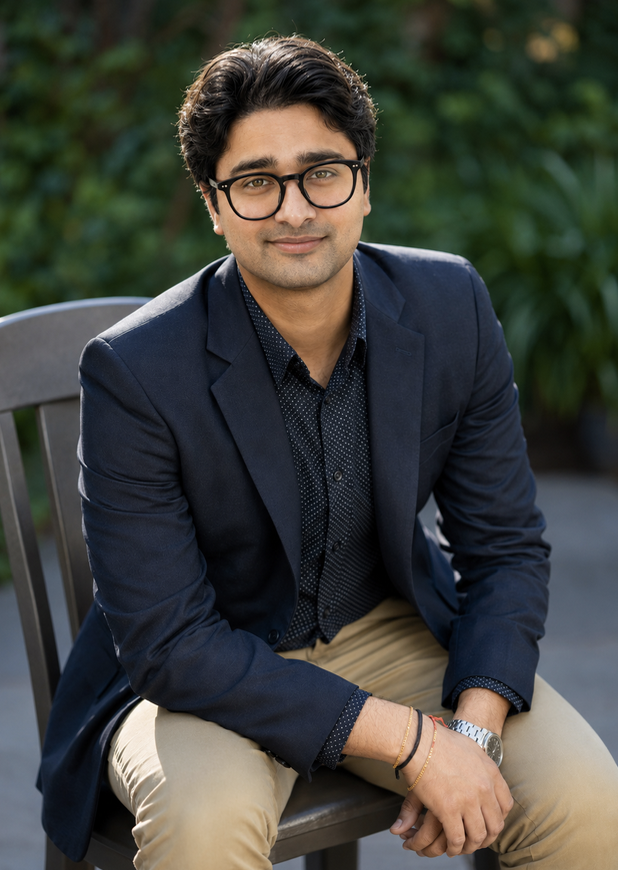
Hi, I’m Mohit Nadkarni — a computational neuroscience and medical AI researcher focused on understanding how cognition, learning, and clinical outcomes can be improved through data-driven research, predictive modeling, and human-centered technology.
My work sits at the intersection of neuroscience, artificial intelligence, cognitive psychology, and medicine. Over the past several years, I have contributed to research initiatives spanning neurodevelopmental outcomes, congenital heart disease, aging and memory decline, traumatic brain injury, Alzheimer’s disease, and computational models of human learning and decision-making.
At Dell Medical School and the Texas Center for Pediatric and Congenital Heart Disease, I worked as a Clinical Research Associate supporting multidisciplinary clinical research focused on pediatric and congenital heart disease. My work involved analyzing large-scale clinical datasets, contributing to predictive and outcomes-based research models, and collaborating with physicians, surgeons, neurologists, cardiologists, therapists, and intensivists to better understand how neurological and developmental outcomes evolve in medically complex pediatric populations.
A major focus of this work centered on improving neurodevelopmental and learning outcomes in children with congenital heart disease through earlier intervention, cognitive assessment, and individualized care strategies. This included research involving feeding development, learning adaptation, patient recovery trajectories, and broader social determinants of health affecting long-term outcomes.
In parallel, my neuroscience research background has heavily focused on memory systems, learning variability, and cognitive adaptation across the lifespan.
At The University of Texas at Austin Preston Lab, I contributed to large-scale projects investigating how memory changes with age using behavioral experimentation, computational modeling, fMRI analysis, and noninvasive brain stimulation techniques. This work explored how prior experiences shape future memory formation, how delayed learning mechanisms evolve over time, and how individuals differ in their ability to integrate and retain information.
Later, at University of California, Irvine in the Bornstein Lab, I expanded this work into computational cognitive neuroscience and memory research involving aging, alcoholism, and substance use disorders. There, I worked on projects analyzing working memory, long-term memory formation, reinforcement learning dynamics, and behavioral adaptation through both computational and neurocognitive frameworks.
Across these experiences, I became increasingly interested in how different learning methodologies — including blocked learning, interleaved learning, delayed retrieval, reinforcement-based adaptation, and contextual memory integration — influence both healthy cognition and neurological recovery. My broader research interests now focus on how artificial intelligence and computational systems can be leveraged to personalize learning, predict clinical outcomes, and support patient-centered healthcare decision making.
I have also contributed to peer-reviewed publications, conference presentations, and national research initiatives through collaborations with researchers and physicians across neuroscience, cardiology, neurology, cognitive science, and AI-driven healthcare systems.
My work has included collaborations with researchers and clinicians such as Alison Preston, Aaron Bornstein, Michael Taylor, Louisa Keith, Charles D. Fraser Jr., Ying Ding, and researchers across Stanford University and University of California, Irvine working in computational neuroscience, AI-assisted healthcare, and human cognition.
Today, my goal is to continue building research-driven systems that bridge neuroscience and artificial intelligence in ways that create measurable improvements in healthcare, cognition, and patient quality of life.